
Northern Argentina is the Argentina that conventional brochures leave out: hills that turn seven different colors in the same dawn light, adobe villages where time keeps a different measure, and a high-altitude white wine, Torrontés, found nowhere else in the world. ÉLEVÉ invites you to experience it privately, unhurried, with the judgment this landscape demands and the kind of access a luxury traveler deserves.
Color that changes with the light, the silence of the puna and Argentina's most unexpected wine
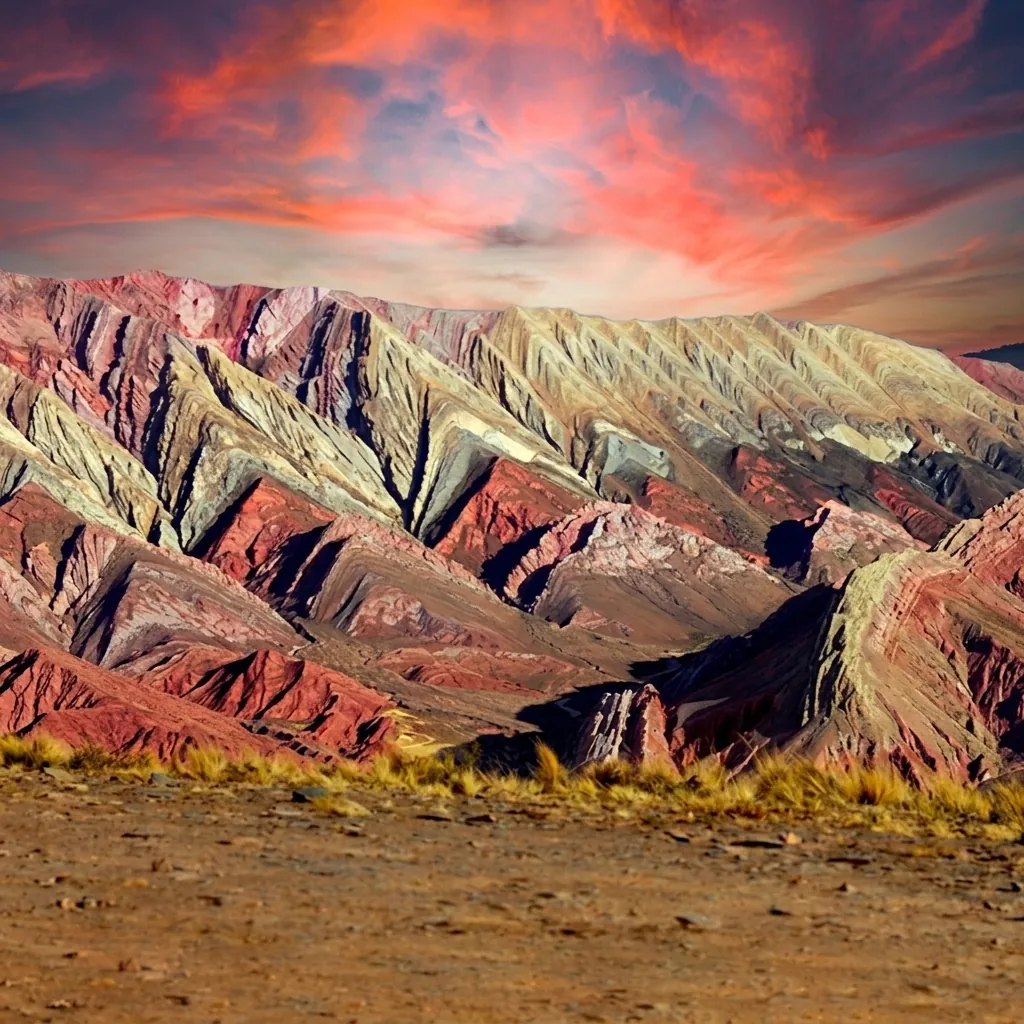
The Quebrada de Humahuaca, a UNESCO World Heritage Site, packs into barely 95 miles a cultural and scenic density unmatched in South America: the Hill of Seven Colors in Purmamarca, which at seven in the morning shows hues that are gone by noon; the adobe villages of Tilcara and Humahuaca, built centuries ago on the same foundations; and the Salinas Grandes at 11,300 feet, where more than 190 square miles of white salt reflect the sky until the horizon dissolves. The Calchaquí Valleys add the wine: vineyards between 5,600 and 6,600 feet that produce the world's most aromatic Torrontés and high-altitude Malbecs that astonish even the most skeptical tasters. Salta closes the northern journey with its intact colonial architecture, its local-produce cuisine and a cultural life that rivals far larger cities. Buenos Aires, prologue or epilogue depending on the direction of travel, adds the cosmopolitan dimension that completes the experience.
Day-by-day itinerary — 11 nights
Arrival in Buenos Aires — Jujuy: the north starts to breathe differently
From Ezeiza, your concierge takes you to Aeroparque for the domestic flight to Jujuy. The provincial capital, at 4,100 feet above sea level, calls for a quiet afternoon of acclimatization: the colonial boutique hotel in the historic center is the perfect place to settle in, feel the drier, thinner air of the high plateau and prepare for the days ahead. An introductory dinner of northwestern cuisine, humita, llama empanadas, house locro, with a selection of high-altitude wines is this journey's first plot twist.
Jujuy — The hill that changes color and the salt that mirrors the sky
Day 2: Purmamarca at dawn is one of the most powerful images in Argentina. The low early light intensifies the layers of oxide, clay and limestone on the Hill of Seven Colors to a point no photograph fully captures; you have to be there. The artisan market and lunch at a local eatery serving puna cuisine round off the morning. In the afternoon, a private 4x4 climbs to the Salinas Grandes at 11,300 feet: more than 190 square miles of white salt where the sky is mirrored on the ground and you lose track of where one ends and the other begins. Day 3: Tilcara and its pre-Inca Pucará, a stone fortress overlooking the Quebrada that recalls this territory was strategic long before the Spanish arrived. A private weaving workshop with a local artisan turns craft into a real exchange, not a tourist demonstration.
Jujuy — Cafayate: the Quebrada de las Conchas and the first Torrontés
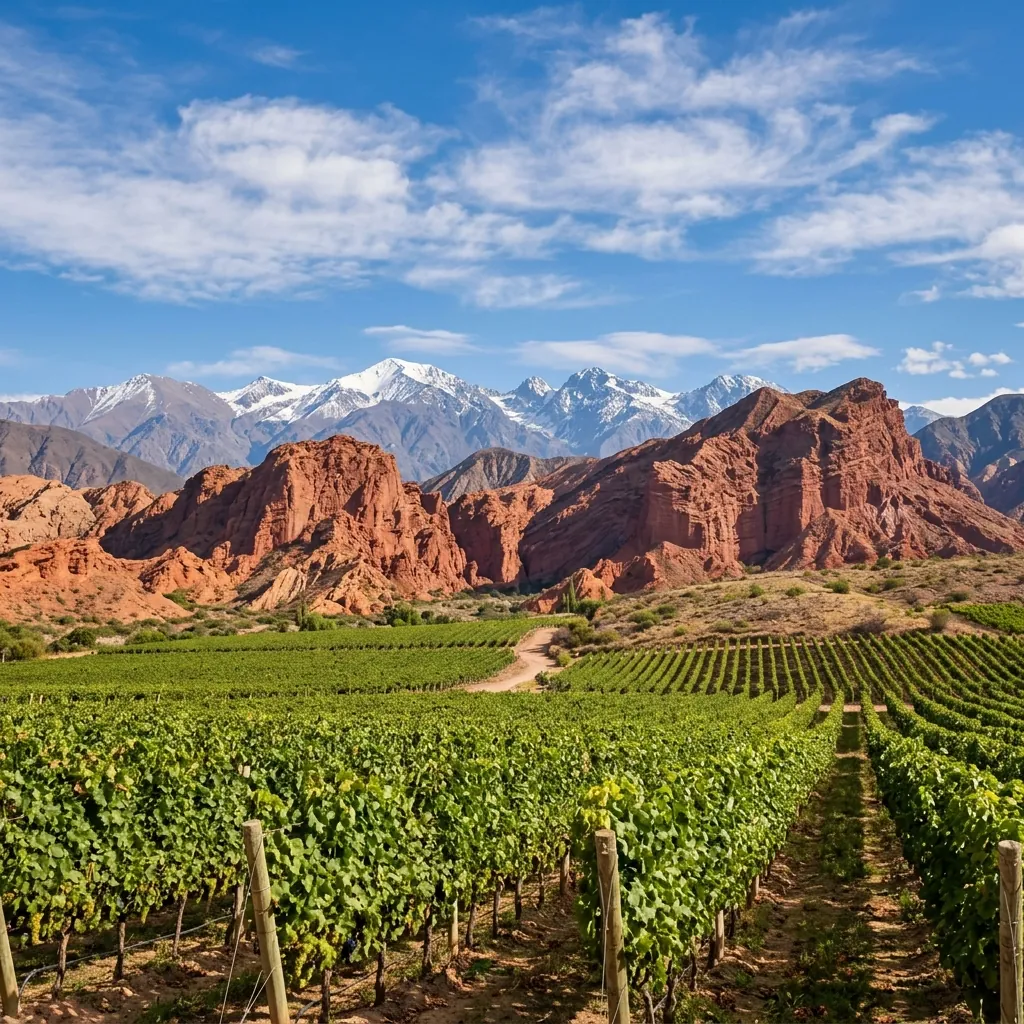
Route 40 toward Cafayate runs through the Quebrada de las Conchas, a gorge of red sandstone sculpted by the wind over millions of years into shapes the locals have given names of their own: El Anfiteatro, La Garganta del Diablo, Los Castillos. Your private vehicle stops wherever you decide; some of those rock formations deserve a walk and a moment of silence. Arriving in Cafayate, with the sun setting over the vineyards and the air smelling of ripe grapes, switches on the other register of the northern journey. Dinner at the winery hotel with a first tasting of estate-grown Torrontés is the start of something that will be hard to leave behind.
Cafayate — A tasting with the winemaker and the most remote villages of the Calchaquí Valleys
Day 5: two boutique wineries in the Cafayate Valley, chosen for their singularity and the quality of private access ÉLEVÉ arranges. The technical tasting with the resident winemaker is a vertical comparison of Torrontés, aromatic, fresh and impossible to replicate at another altitude, high-altitude Malbec and Tannat. The pairing lunch in the vineyard, with local goat cheeses and views of the red hills, is one of those meals that justify the trip on their own. An afternoon cycling through the vineyards is the best antidote to days of flying. Day 6: the Calchaquí Valleys hold two gems most travelers never reach. Molinos, with its perfectly preserved 17th-century colonial church, and Cachi, at 7,500 feet, with earthen streets and white adobe, one of the most beautiful and quietest villages in Argentina. Lunch at a local-produce inn, and back to Cafayate at sunset.
Salta — The north's most seductive colonial city and the Children of Llullaillaco
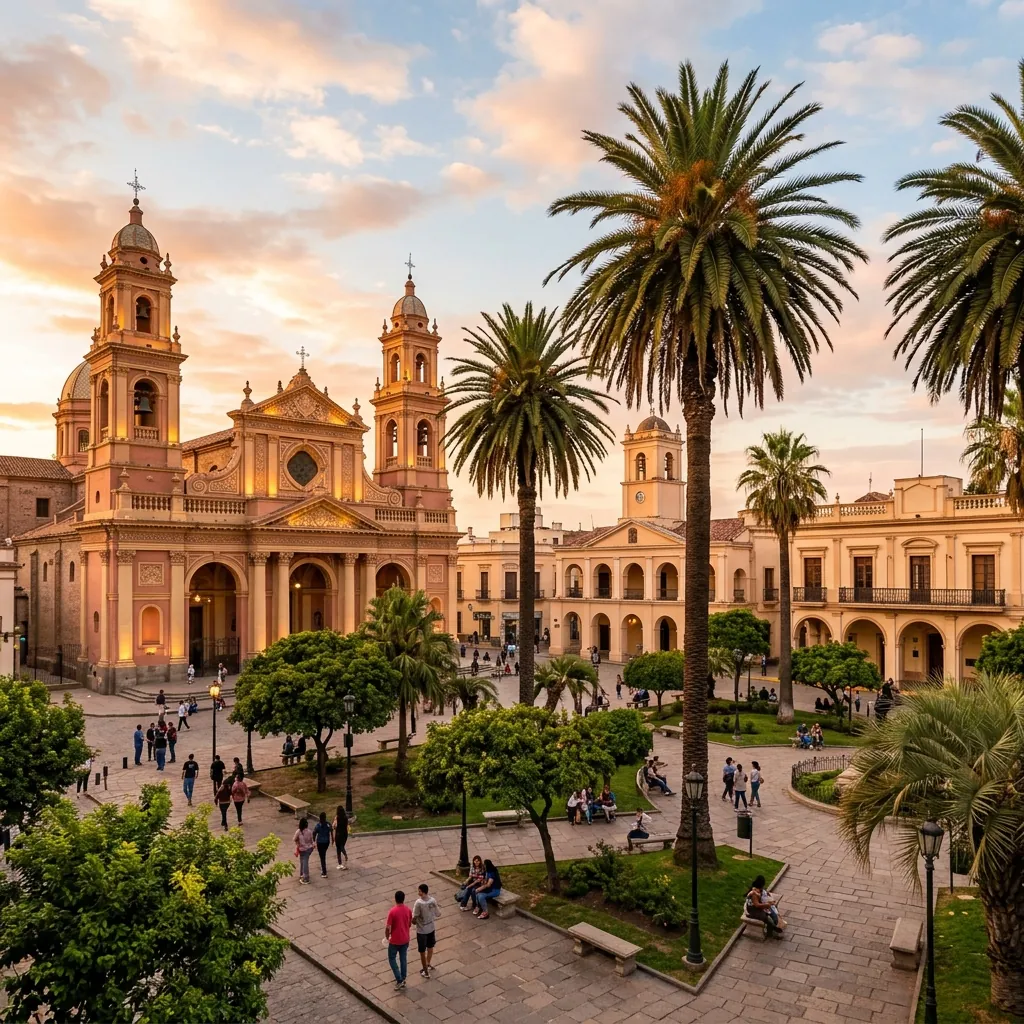
Day 7: Route 68 to Salta crosses vineyards climbing toward the mountains in improbable terraces. The city of Salta impresses from the first stroll: colonial architecture in a state of preservation European visitors recognize as their own, with a main square, cathedrals and convents that the 1692 earthquake left almost untouched. MAAM, the Museum of High Mountain Archaeology, holds the Children of Llullaillaco: three 500-year-old Inca figures found at 22,110 feet, in a state of preservation that defies explanation. One of the most remarkable archaeological finds in the Americas. Dinner at a northern-fusion restaurant closes the day with the elegance Salta does so well. Day 8: the San Bernardo Convent, the Cabildo and locro at a local eatery set the rhythm of the morning. The cable car up Cerro San Bernardo rewards you with a panorama of Salta and its valley that's worth the ride, if only to see the scale of what you've just traveled.
Salta — Buenos Aires: from the deep north to the cosmopolitan capital
Private transfer to the airport and flight to Buenos Aires. The contrast is part of the journey: from adobe and the puna to the warm streets of Palermo. A free afternoon in the city, shopping, resting or an unscheduled wander, is the transition both body and mind appreciate. Dinner at a chef-driven Porteño restaurant prepares the palate for the journey's finale.
Buenos Aires — Tango, the parrilla and the perfect farewell
Day 10: a private tour with a bilingual cultural guide through Palermo, Recoleta and San Telmo, three neighborhoods that represent three centuries and three different souls of Buenos Aires. Lunch at a benchmark parrilla: the world's finest beef over the embers and a Malbec chosen for the occasion. MALBA in the afternoon, with the continent's finest collection of Latin American art. The night at a historic milonga in Almagro with a private show, a premium table and an introductory tango class that turns spectators into participants. Day 11: a free morning for Palermo Soho or the San Telmo market. Private transfer to Ezeiza airport for your flight home. ÉLEVÉ coordinates every leg so your last memory of the trip isn't the departure lounge.
What's included — no fine print
- Private sunrise at Purmamarca's Hill of Seven Colors
- Ascent to the Salinas Grandes (11,300 ft) in a private 4x4
- Technical tasting with the winemaker at a boutique winery in Cafayate
- Excursion to the remote villages of the Calchaquí Valleys
- Private indigenous weaving workshop with a local artisan
- Tango gala night at a historic Buenos Aires milonga
To explore this journey's destinations in depth, visit our page on Calchaquí North. If you're looking for a different journey, the Argentina Signature combines Buenos Aires, Bariloche and Mendoza, and the Patagonia Signature takes you to the glaciers of the south. See all our available itineraries.
The base journey covers 10 nights: 3 in Jujuy, 4 in Cafayate and the Calchaquí Valleys, 1 in Salta and 2 in Buenos Aires. With 12 nights you can spend more days in the Quebrada and add an extra excursion to the Salinas Grandes or to Cachi, one of the most beautiful villages of the Puna.
Spring (September–November) and autumn (March–May) are ideal: mild temperatures, clear skies and the most intense colors in the Quebrada de Humahuaca. Summer can bring rain to the Puna, though the light is spectacular. ÉLEVÉ adapts the itinerary to the season you choose.
Part of the route runs at nearly 10,000 feet or more. ÉLEVÉ builds an acclimatization day in the city of Jujuy into the itinerary and coordinates the pace of each excursion with local guides. Most travelers adapt without difficulty within 24-48 hours.